
The Culinary Connoisseur
Cumber-some
18
Nov
Nov
Cucumbers are believed to have originated in India and
have been cultivated about three thousand years. While cucumbers are especially
popular in Greek and Arab cuisine, there is no evidence that the species known
as “Persian cucumber” originates in that part of the world.
have been cultivated about three thousand years. While cucumbers are especially
popular in Greek and Arab cuisine, there is no evidence that the species known
as “Persian cucumber” originates in that part of the world.
Cucumbers have an amazing capacity to retain water and to
remain cool. Its interior may be up to twenty degrees cooler than its exterior.
A fact that explains the old expression, “cool as a cucumber”.
remain cool. Its interior may be up to twenty degrees cooler than its exterior.
A fact that explains the old expression, “cool as a cucumber”.
Similar to a
common green-skinned cucumber, the Persian cucumber measures about four to five
inches long. The crunchy watery texture offers a sweet flavor.
common green-skinned cucumber, the Persian cucumber measures about four to five
inches long. The crunchy watery texture offers a sweet flavor.
The sweet-tasting Persian cucumber makes an excellent
addition to salads, sandwiches, and is even ideal for making crisp pickles.
Slice thinly; sprinkle with salt; let stand about a half hour; drain; add white
vinegar and slivered onions or lemon juice and dill or a splash of white
vinegar, chopped dill and a generous spoonful of sour cream; mix well and
serve. To store, refrigerate cucumbers in a crisper drawer.
addition to salads, sandwiches, and is even ideal for making crisp pickles.
Slice thinly; sprinkle with salt; let stand about a half hour; drain; add white
vinegar and slivered onions or lemon juice and dill or a splash of white
vinegar, chopped dill and a generous spoonful of sour cream; mix well and
serve. To store, refrigerate cucumbers in a crisper drawer.
Having practically no fat, cucumbers are low in calories
and offer a small measure of fiber. Peeling Persian cucumbers is not necessary
but washing is recommended as they are waxed to retain moisture for markets.
Eating five daily servings of fruits and vegetables lowers the chances of
cancer. A recent study found that eating nine or ten daily servings of fruit
and vegetables effectively lowered blood pressure. So start by adding
vegetables to your diet today!
and offer a small measure of fiber. Peeling Persian cucumbers is not necessary
but washing is recommended as they are waxed to retain moisture for markets.
Eating five daily servings of fruits and vegetables lowers the chances of
cancer. A recent study found that eating nine or ten daily servings of fruit
and vegetables effectively lowered blood pressure. So start by adding
vegetables to your diet today!
Preserved
lemon is a staple in Sephardic cuisine. If you are unfamiliar with it or do not
want to prepare it, use the lemon zest for excellent results.
lemon is a staple in Sephardic cuisine. If you are unfamiliar with it or do not
want to prepare it, use the lemon zest for excellent results.
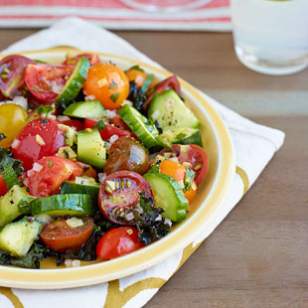
3 cups diced
unpeeled Persian cucumbers
unpeeled Persian cucumbers
1 1/2 cups
assorted cherry tomatoes, halved or quartered
assorted cherry tomatoes, halved or quartered
1/4 cup finely
chopped white onion
chopped white onion
3 tablespoons checked
fresh parsley, coarsely chopped
fresh parsley, coarsely chopped
1 tablespoon checked
fresh mint, coarsely chopped
fresh mint, coarsely chopped
2 teaspoons
minced preserved lemon or 1 teaspoon lemon zest
minced preserved lemon or 1 teaspoon lemon zest
1 tablespoon
fresh lemon juice
fresh lemon juice
1/4 teaspoon kosher
salt
salt
2 tablespoons
extra-virgin olive oil
extra-virgin olive oil
Freshly ground
pepper to taste
pepper to taste
For the
preserved lemons:
preserved lemons:
Lemons
Lemon juice
Kosher salt
Put a kettle
of water on to boil.
of water on to boil.
Use a large
clean jar with a tight-fitting lid for preserving the lemons. See how many
lemons will fit into the jar. You’ll need those lemons plus the juice from
about 1 1/2 times that amount.
clean jar with a tight-fitting lid for preserving the lemons. See how many
lemons will fit into the jar. You’ll need those lemons plus the juice from
about 1 1/2 times that amount.
Leaving one
end intact, cut each lemon you’re preserving into quarters lengthwise. Fill
each lemon “blossom” with about a tablespoon of salt and place in the jar.
end intact, cut each lemon you’re preserving into quarters lengthwise. Fill
each lemon “blossom” with about a tablespoon of salt and place in the jar.
Squeeze the
juice from the extra lemons and pour the lemon juice over the salted lemons.
Fill the rest of the jar with boiling water. Screw the lid on tightly.
juice from the extra lemons and pour the lemon juice over the salted lemons.
Fill the rest of the jar with boiling water. Screw the lid on tightly.
Let the jar
sit on your counter for about 10 days, shaking it up once a day to redistribute
juices and salt. Then refrigerate for up to 6 months.
sit on your counter for about 10 days, shaking it up once a day to redistribute
juices and salt. Then refrigerate for up to 6 months.
To use:
Rinse the preserved lemons before using. You can use the yellow rind and/or the
flesh, but discard the bitter white pith.
Rinse the preserved lemons before using. You can use the yellow rind and/or the
flesh, but discard the bitter white pith.
Combine
cucumbers, tomatoes, onion, parsley, mint, preserved lemon (or zest), lemon
juice and salt in a medium bowl. Let stand for at least 10 minutes (and up to 2
hours) for the flavors to meld.
cucumbers, tomatoes, onion, parsley, mint, preserved lemon (or zest), lemon
juice and salt in a medium bowl. Let stand for at least 10 minutes (and up to 2
hours) for the flavors to meld.
Add oil and toss
to coat. Season with pepper.
to coat. Season with pepper.

1/2 cup rice
vinegar
vinegar
1/4 cup water
½ teaspoon
crushed red pepper
crushed red pepper
1 teaspoon sugar
3/4 teaspoon
kosher salt, divided
kosher salt, divided
2 cups sliced
unpeeled Persian cucumbers
unpeeled Persian cucumbers
A few sprigs
fresh dill
fresh dill
1/4 cup nonfat
plain Greek yogurt
plain Greek yogurt
1 1/2
tablespoons olive oil
tablespoons olive oil
Freshly ground
pepper
pepper
1/3 cup crumbled
feta cheese
feta cheese
4 radishes,
thinly sliced
thinly sliced
2 scallions,
thinly sliced
thinly sliced
Combine vinegar,
water, chile, sugar, and 1/2 teaspoon salt in a small saucepan. Bring to a
boil, then simmer for 2 minutes. Let cool slightly.
water, chile, sugar, and 1/2 teaspoon salt in a small saucepan. Bring to a
boil, then simmer for 2 minutes. Let cool slightly.
Place cucumbers
in a shallow bowl or glass dish along with dill sprigs. Carefully pour on the
hot liquid. Refrigerate, stirring once or twice, for 20 minutes. Strain off
most of the liquid.
in a shallow bowl or glass dish along with dill sprigs. Carefully pour on the
hot liquid. Refrigerate, stirring once or twice, for 20 minutes. Strain off
most of the liquid.
Transfer 2
tablespoons of the liquid to a large bowl. Whisk in yogurt, oil, pepper and the
remaining 1/4 teaspoon salt. Add the cucumber mixture, feta, radishes and scallions;
gently toss to combine.
tablespoons of the liquid to a large bowl. Whisk in yogurt, oil, pepper and the
remaining 1/4 teaspoon salt. Add the cucumber mixture, feta, radishes and scallions;
gently toss to combine.