The Culinary Connoisseur
What’s in Your Pot?
25
Oct
Oct
Once upon a time there was a single brand of cookware
that every kallah bought. It was so
universally popular that the very name became a household word. It featured stainless steel pots with a thin
coating of aluminum on the bottom. It was thought to be the ultimate in quality
cookware.
that every kallah bought. It was so
universally popular that the very name became a household word. It featured stainless steel pots with a thin
coating of aluminum on the bottom. It was thought to be the ultimate in quality
cookware.
Today we know that there are better options when it comes
to cookware. The single most important
feature of cookware is its ability to conduct heat. The better the heat conduct the more quickly
and evenly your food will cook. It will
also allow you to use lower cooking flames, saving energy and keeping your
kitchen cool.
to cookware. The single most important
feature of cookware is its ability to conduct heat. The better the heat conduct the more quickly
and evenly your food will cook. It will
also allow you to use lower cooking flames, saving energy and keeping your
kitchen cool.
Among metals, the best heat conductor is gold with copper
and aluminum running a close second and third.
Of course, gold is way too expensive for cookware so we have to stick
with second best. Aluminum and copper
conduct heat so well that at one time they were used exclusively to make
cookware. However, being soft metals,
they were easily dented. Also, both these
metals react easily with food, something best avoided since the taste and color
may change dramatically. That brings us
back to the more stable stainless steel. Unfortunately, stainless steel is not
good heat conductor at all. It will not
spread heat from the stovetop flame, causing hot spots on the surface of the
pot directly above the fire. Hot spots
lead to burnt, stuck-on food.
and aluminum running a close second and third.
Of course, gold is way too expensive for cookware so we have to stick
with second best. Aluminum and copper
conduct heat so well that at one time they were used exclusively to make
cookware. However, being soft metals,
they were easily dented. Also, both these
metals react easily with food, something best avoided since the taste and color
may change dramatically. That brings us
back to the more stable stainless steel. Unfortunately, stainless steel is not
good heat conductor at all. It will not
spread heat from the stovetop flame, causing hot spots on the surface of the
pot directly above the fire. Hot spots
lead to burnt, stuck-on food.
The practical solution is to combine the two. Use aluminum or copper to spread heat and
stainless steel for the cooking surface to prevent reactions to many foods. Clad cookware does just that. It sandwiches an aluminum core that extends
to the top rim of the pot, a stainless exterior and an 18/10 stainless interior
cooking surface to give you the benefits of both.
stainless steel for the cooking surface to prevent reactions to many foods. Clad cookware does just that. It sandwiches an aluminum core that extends
to the top rim of the pot, a stainless exterior and an 18/10 stainless interior
cooking surface to give you the benefits of both.
Clad cookware can be used in your oven at temperatures up
to 500 degrees. It’s perfect for recipes
that call for food to be seared in a hot pan on the stovetop and finished in
the oven.
to 500 degrees. It’s perfect for recipes
that call for food to be seared in a hot pan on the stovetop and finished in
the oven.
In bonded, or layered, cookware most foods can be quickly
cooked at medium heat. Use high heat only
for boiling water. High heat will cause
discoloration of the stainless exterior that will detract from the beauty of
your cookware. Also remember to add salt
once the liquid in the pot has come to a boil because salt sitting at the
bottom of a pot may cause pitting.
cooked at medium heat. Use high heat only
for boiling water. High heat will cause
discoloration of the stainless exterior that will detract from the beauty of
your cookware. Also remember to add salt
once the liquid in the pot has come to a boil because salt sitting at the
bottom of a pot may cause pitting.
Lifting a large piece of bonded cookware for the first
time may give you a shock. Good cookware
is heavy! The heavier the pot the better
the heat conduct.
time may give you a shock. Good cookware
is heavy! The heavier the pot the better
the heat conduct.
Some clad cookware features non-stick interiors for those
who prefer to cook with less added fat. Better brands will use non-stick
coatings that are durable enough to stand up to the same high usage as the
cookware itself. Today many
manufacturers are using ceramic coatings instead of plastic-based coatings.
who prefer to cook with less added fat. Better brands will use non-stick
coatings that are durable enough to stand up to the same high usage as the
cookware itself. Today many
manufacturers are using ceramic coatings instead of plastic-based coatings.
While all this technical information is fascinating, what
does it actually mean to the cook?
Especially, the Jewish cook?
Without a doubt, we use our cookware more than any other sector of
cookware consumers. We cook daily for
large numbers; we cook often for Yomim Tovim and simchas, and we eat out less
than the average American. Therefore, we
can certainly benefit from hardworking, long-lasting, quality cookware. Cookware should last for years; it should not
need replacing every time we clean for Pesach.
Choosing the right type will mean years of cooking enjoyment.
does it actually mean to the cook?
Especially, the Jewish cook?
Without a doubt, we use our cookware more than any other sector of
cookware consumers. We cook daily for
large numbers; we cook often for Yomim Tovim and simchas, and we eat out less
than the average American. Therefore, we
can certainly benefit from hardworking, long-lasting, quality cookware. Cookware should last for years; it should not
need replacing every time we clean for Pesach.
Choosing the right type will mean years of cooking enjoyment.
2
thick cut fillet steaks
thick cut fillet steaks
1
tablespoon olive oil
tablespoon olive oil
2
tablespoons cracked peppercorns
tablespoons cracked peppercorns
2
teaspoons kosher salt
teaspoons kosher salt
1/4
cup diced shallots
cup diced shallots
4
cloves garlic, minced
cloves garlic, minced
1
cup cabernet sauvignon (red wine)
cup cabernet sauvignon (red wine)
1
tablespoon Dijon mustard
tablespoon Dijon mustard
3
tablespoons chopped parsley
tablespoons chopped parsley
Salt
and pepper to taste
and pepper to taste
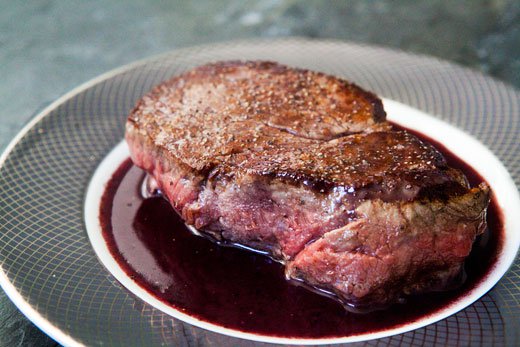
Preheat oven to 350 F.
Heat a heavy skillet (not nonstick) over medium-high heat.
Once the pan is very hot add the oil. Season
steaks well with salt and pepper. Sear
steaks 1 to 2 minutes on each side. Place in oven about 5 – 10 minutes for
medium rare or until steaks reach desired doneness. Allow steaks to rest 5
minutes before serving.
Once the pan is very hot add the oil. Season
steaks well with salt and pepper. Sear
steaks 1 to 2 minutes on each side. Place in oven about 5 – 10 minutes for
medium rare or until steaks reach desired doneness. Allow steaks to rest 5
minutes before serving.
After removing steaks from pan, add shallots and garlic;
cook for 2 minutes on medium heat. Whisk in wine and mustard and scrape up any
crusty bits sticking to the pan; cook until reduced to half. Add parsley
and season to taste. Serve over steak.
cook for 2 minutes on medium heat. Whisk in wine and mustard and scrape up any
crusty bits sticking to the pan; cook until reduced to half. Add parsley
and season to taste. Serve over steak.